
Storytelling in animation is what separates a video people watch to the end from one they close after five seconds. Beautiful visuals grab attention, but only a story holds it.
Even a 30-second ad or an explainer is a small story with a hero, a conflict and a resolution. Here are the principles that help build it.
1. The hero wants one thing but needs another
Every strong character has a want — what drives the plot — and a need — what they’re actually missing. Want: meet the project deadline. Need: learn to delegate. The tension between them makes the hero alive and the story deeper.
In advertising it works the same way. The client wants accounting software but actually needs peace of mind and a free evening. A video that speaks to the need, not just the want, hits much harder.
2. «Because of» instead of «and then»
A weak story is a list of events: the hero woke up, and then went to work, and then met a friend. A strong one is a chain of cause and effect: the hero overslept, so was late, so missed an important meeting. Every event must follow from the one before.
If a scene can be removed and nothing changes, it doesn’t belong.
3. The four «whys»
If one of them has no answer, rethink the story. These four questions quickly show where a plot relies only on pretty visuals.
4. The hero’s journey in miniature

The classic hero’s journey has twelve stages, but four are enough for a short video: the ordinary world, a challenge, a struggle and change. An explainer uses the same scheme: a client with a problem, a search for a solution, your product, a new life without the problem. My explainer videos follow exactly this pattern.
The hero must change. If at the end of the video they’re the same as at the start, there was no story — just a product demo. The change can be small: from tired to calm, from confused to confident.
5. Universal feelings
A story about an accounting service can move people if it rests on something everyone knows: fatigue, fear of mistakes, wanting an evening with family. A specific product plus a universal feeling is a formula that has worked in advertising for decades. Story-driven examples are in my portfolio.
Common story mistakes in videos
- No conflict: everything is fine from start to end — boring.
- Too many characters: in a short video viewers can bond with only one.
- Heavy-handed moral: let viewers reach the conclusion themselves.
- Weak ending: the last seconds stick most, don’t waste them on a logo without emotion.
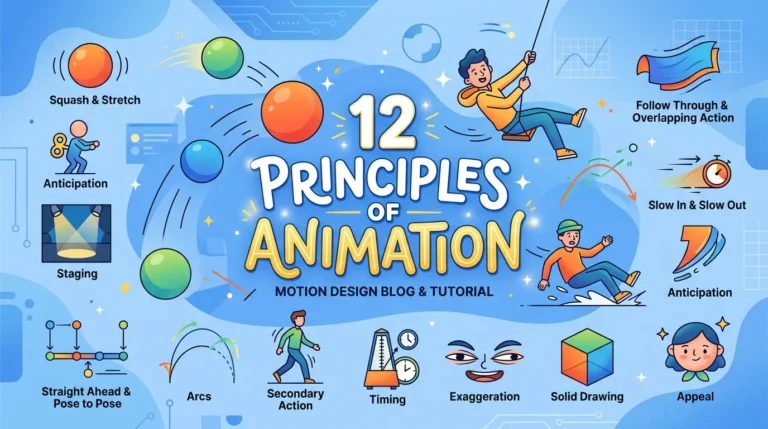
Once the story is ready, the next steps are the storyboard and animatic. And to make characters move convincingly, remember the 12 principles of animation. Need a story-driven video for your brand? Get in touch.
Ready to bring your idea to life?
Tell me a bit about your task — I’ll come back with a format, rough timeline and a quote within one business day.
Get a quote