
Freelancing in motion design means freedom, but also a constant question: where will the next job come from? Many people wait for clients to find them and spend years on the same marketplaces.
There’s too little work and too much competition.
I’ve worked with clients directly and through Upwork and Fiverr for many years, and honestly: there’s enough work. Most people just look for it in the same places. Here are three strategies that change things faster than a new course or another plugin.
1. Look for clients where others don’t
Famous studios get dozens of emails every day. Mid-sized companies with their own marketing, on the other hand, often have no trusted motion designer at all and search for one for months.

- Companies that make video: SaaS products, online stores, education platforms, agencies without an in-house motion designer.
- Platforms: Upwork and Fiverr for the global market, Behance for your portfolio, Freelancehunt for Ukrainian clients.
- LinkedIn: search for people, not companies — marketing managers, product marketers, creative directors.
- Direct contact: find the person who makes the decision and write to them, not to a generic inbox.
Tip:
Instead of mass mailing, write short and personal: one sentence about their product, one example of your work in a similar niche and a concrete offer. Three such emails beat a hundred templates.
Another trick is a niche portfolio. If you write to SaaS companies, show two or three videos about digital products, not everything you’ve ever made. The client should see in five seconds: this person has already done what I need.
2. Show three options instead of one
When a client sees one option, they almost always ask for changes. Not because the work is bad, but because people want to take part in the result and lack the words for precise feedback.
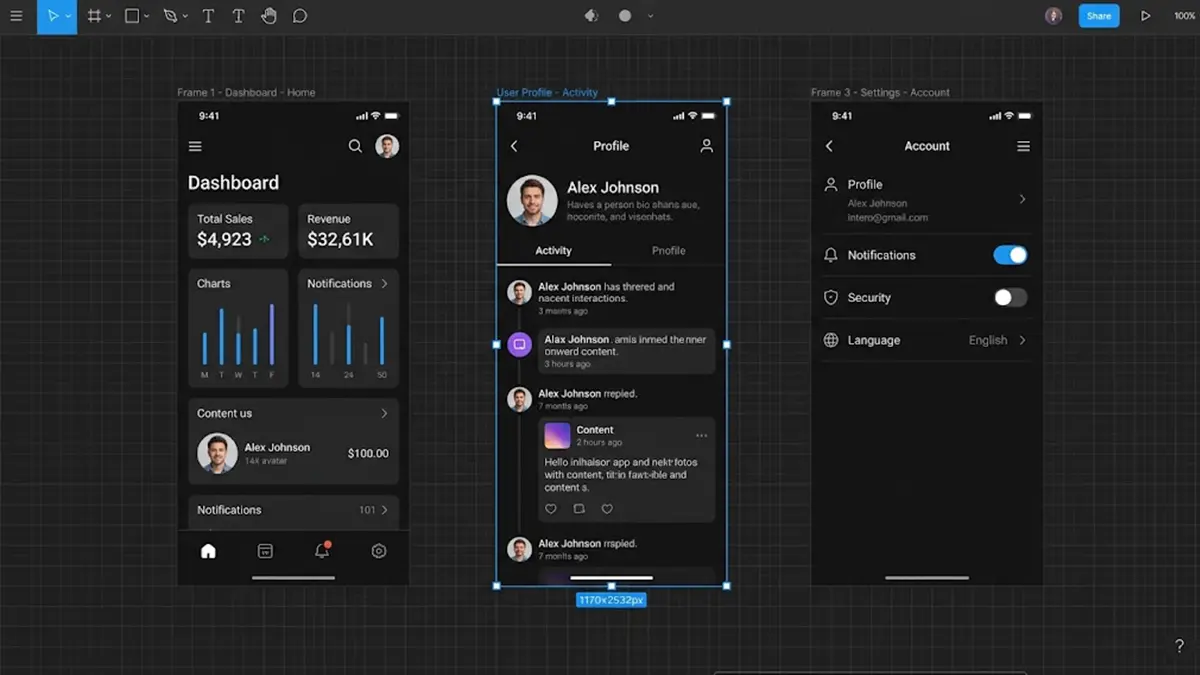
This works for styleframes, palettes, music, fonts and even the character of the motion. The client chooses, feels like a co-author, and revisions drop noticeably. It’s exactly how I present sketches for logo animation.
When clients choose, they defend their choice. When clients get one option, they edit it.
And don’t send options silently. A short one- or two-minute video comment where you explain each option out loud works better than any email: the client hears the logic behind your choices and rarely asks to «try something else».
3. Let paid work fund creative work
Not every job will end up in your portfolio, and that’s fine. Corporate videos, report infographics or interface animation may not be the flashiest, but they pay steadily.

- Commercial projects: pay the bills and give you calm.
- Personal projects: show what you want to be paid for in the future.
- Learning: one new skill per quarter so you don’t stand still.
The key rule: do the work you want to be paid for before anyone pays you for it. A portfolio attracts exactly the kind of jobs it shows.
At first it may be one personal project a month, and later a whole week between big jobs. Some of my most interesting clients came exactly from such «free» pieces: they saw something in my portfolio that nobody had ordered yet.
4. Small things that make you reliable
None of this takes talent, but it’s exactly why clients come back and recommend you to others. Repeat work and referrals are the cheapest way to a stable freelance business.
Start today
Pick one strategy and use it this week: find five new companies, show your next client three options or set aside an evening for a personal project. If you’re just starting, begin with the guide on how to become a motion designer from scratch.
And if you’re looking for a motion designer for your project, take a look at my portfolio.
Ready to bring your idea to life?
Tell me a bit about your task — I’ll come back with a format, rough timeline and a quote within one business day.
Get a quote