
How long does an animated video take? For a 60–90 second explainer, a realistic timeline is three to eight weeks. Sounds long, but there are several stages behind it, and each one is needed for the video to work.
Here’s what the process looks like with me, how long each stage takes and what delays projects most often. This is how I work on every explainer video.
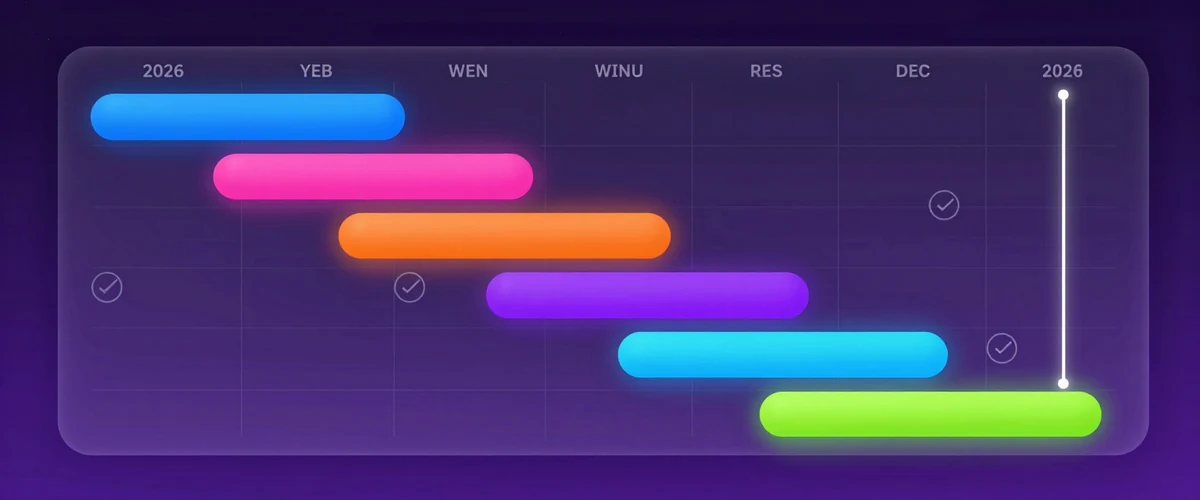
1. Brief and strategy: 2–5 days
We define the audience, key message and goal. This stage is delayed by a vague brief, missing logo and brand guide, or several decision-makers with no clear lead.
To move through this stage fast, prepare answers to a few questions: who your viewer is, what they should understand after watching, what action they should take, where the video will be shown and which videos you like. With those answers the brief takes one meeting, not a week of emails.
2. Script: 3–7 days
The text is the foundation. Until it’s approved there’s no point drawing: any text change changes the visuals too.
For a one-minute video that’s roughly 130–150 words of voice-over. It sounds like little, but this is the hardest part: fitting the main idea, problem, solution and call to action so the viewer doesn’t get tired. A script usually goes through two or three rounds of edits.
3. Styleframes and storyboard: 4–7 days
A few key frames in the final style and a storyboard of the whole video. The most important stage: a mistake missed here costs three times more time during animation.
At this stage you already see what the video will look like: colors, characters, fonts, the character of the illustrations. This is the time to voice every style wish, because changing the style after animation starts means redoing every scene.
4. Voice-over: 2–5 days
Choosing a voice artist, recording and editing. Each extra language is a separate recording and often separate animation timing.
5. Animation: 1.5–3 weeks
The longest stage: motion, transitions, sound, effects. A 2D video is faster, 3D takes a week or two longer due to modeling and rendering.
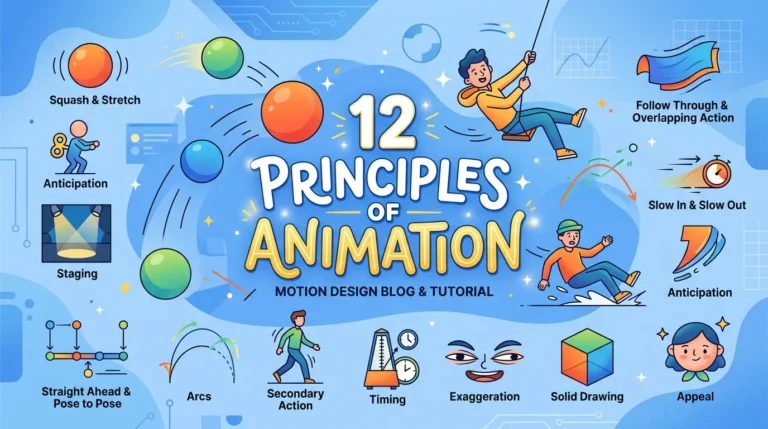
During animation the client usually gets one or two work-in-progress versions to judge motion and timing. Feedback here should be about the motion itself: speed, accents, transitions, not the text or style already approved. To keep the motion alive at this stage, I lean on the 12 principles of animation.
6. Revisions and delivery: 3–7 days
Revision rounds, the final render and versions for different formats: 16:9 for the website, 9:16 and 1:1 for social media.
What delays a project most
- Slow feedback: two days waiting for a reply often shifts the whole schedule by a week.
- Changes after approval: a rewritten script during animation sends the project back to the start.
- Scattered feedback: comments from five people that contradict each other.
Can it be faster?
Yes, if the video is short, the style simple, the script and voice-over ready and approvals happen within a day. I take rush projects, but then the schedule compresses through parallel work and costs more. The most reliable way to get a video fast is a clear brief and quick replies.
Ready to bring your idea to life?
Tell me a bit about your task — I’ll come back with a format, rough timeline and a quote within one business day.
Get a quote